
Effect of popper condition and mass on the energy and maximum height of poppers
DOI:
https://doi.org/10.64804/jfgzkk08Keywords:
popper, energy, work, energy conservation, kinematics, TrackerAbstract
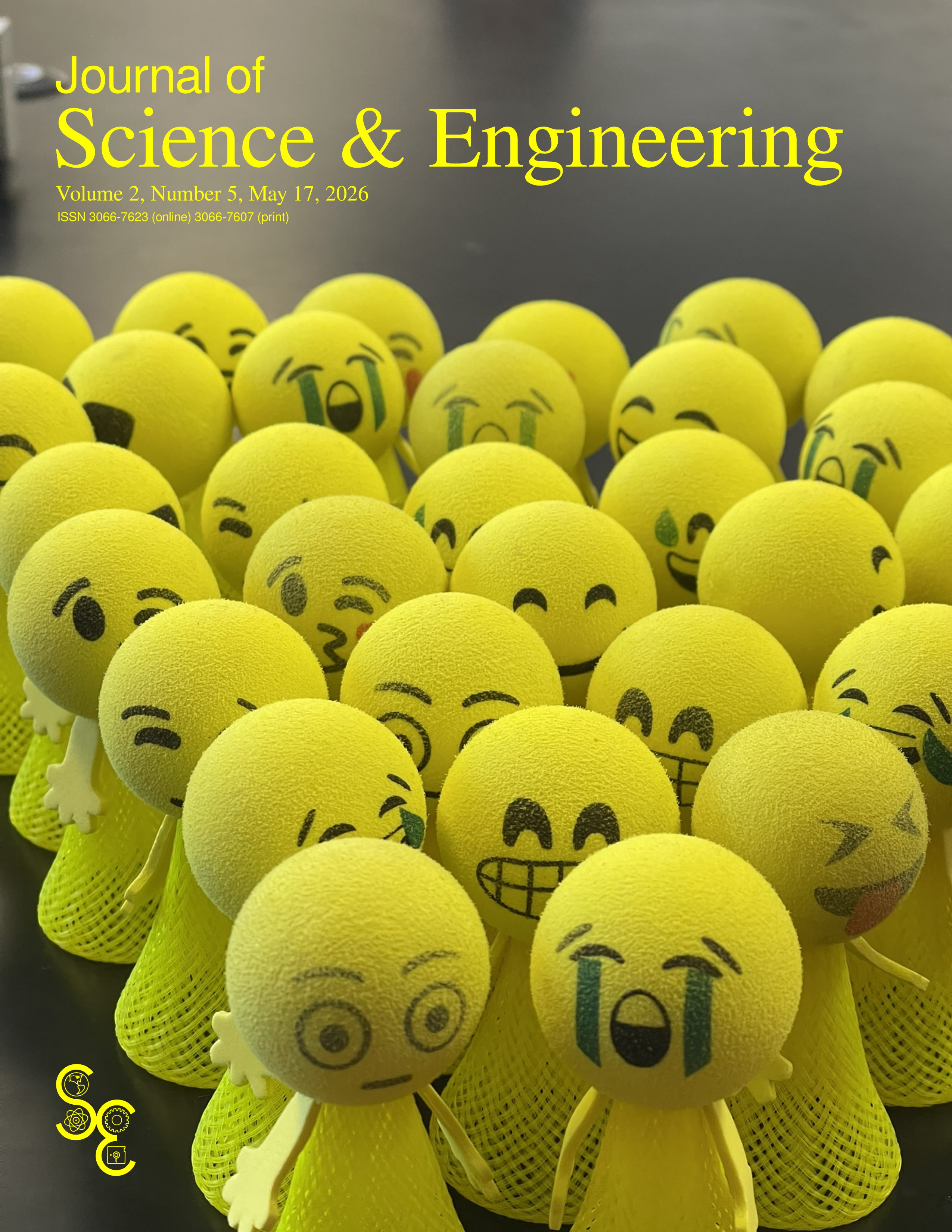
Poppers are inexpensive toys consisting of a ball and spring that are able to jump; each popper has an emoji design on its face. Using poppers as a model system to examine energy conservation, this experiment investigated how their mass and design/condition affected their maximum height and total mechanical energy. We examined two poppers, differentiated by mass and design/condition (5.50 g happy vs 5.40 g sad), and ran multiple trials. We recorded the maximum height and initial velocity using video kinematics. We found that the heavier, happy popper consistently reached greater heights and had a higher initial velocity and total energy than the lighter, sad popper. Due to previous usage, mechanical warping would occur in the sad popper, illustrating the effect of the specimen’s material condition on performance. We believe that specimen condition, i.e. from previous usage, is the primary factor influencing mechanical energy output rather than mass alone or emoji design, but concede our experimental design is unable to conclusively test between these alternatives.
References
P. A. Tipler and G. Mosca, Physics for Scientists and Engineers, 5th ed. (W H Freeman and Company, New York, 2004).
R. A. Pelcovits and J. Farkas, Barron’s AP Physics C Premium (Kaplan North America, Fort Lauderdale, FL, 2024).
W. Moebs, S. J. Ling, and J. Sanny, University Physics, Vol. 1 (OpenStax, Houston, TX, 2016).
D. Brown, R. Hanson, and W. Christian, Tracker video analysis and modeling tool (2025), version 6.3.3.
M. Levine, D. Khettry, K. Coulanges, and R. A. A. Dela Rosa, Acceleration is constant during free fall, Journal of Science & Engineering 2, 41 (2026). DOI: https://doi.org/10.64804/x5ey9355
S. Dakwale, S. Hein, R. Wallace, and S. Yellapragada, The effect of initial vertical position on velocity at which an object strikes the ground, Journal of Science & Engineering 2, 35 (2026). DOI: https://doi.org/10.64804/sstdbq08
I. Sharma, B. DeMairo, and A. Liddawi, Analyzing Gallileo’s distance-time relationship for rolling motion on an inclined plane, Journal of Science & Engineering 2, 38 (2026). DOI: https://doi.org/10.64804/yzsmqz88
O. Ahmadzada, J. Pawelek, M. Butch, and T. Chung, Downward acceleration is independent of mass during free fall, Journal of Science & Engineering 2, 44 (2026). DOI: https://doi.org/10.64804/h4k7fv51
A. Hallur, J. Chan, M. Reznik, P. Zlotnikov, and J. Tiboni, Objects fall with constant acceleration regardless of mass, Journal of Science & Engineering 2, 53 (2026). DOI: https://doi.org/10.64804/hsepny74
L. Brunie, J. Kadan, E. Sobel, and T. Ramesh, Testing the independence of gravitational acceleration from mass: a comparative analysis of free-falling objects near earth’s surface, Journal of Science & Engineering 2, 50 (2026). DOI: https://doi.org/10.64804/bbdgcp59
R. Larson and R. P. Hostetler, Calculus, 8th ed. (Brooks Cole, Pacific Grove, CA, 2005).
Downloads
Published
Data Availability Statement
Data and analyses are available at https://github.com/devangel77b/427jkadan-lab3
Issue
Section
License
Copyright (c) 2026 Journal of Science & Engineering

This work is licensed under a Creative Commons Attribution-NonCommercial 4.0 International License.
How to Cite